More Information
How Can I Tell if My Child Feels Caught Between Parents?
Recognizing the quiet signs of loyalty conflict, and how to give your child steadier ground during separation, divorce, or ongoing tension at home.
The Signs Parents Often Miss
Kids rarely announce that they feel caught in the middle. Instead, it shows up sideways — a child who suddenly edits what they say depending on which parent is in the room, who seems anxious before or after visits with the other parent, or who takes on a strange kind of caretaking role, checking on one parent's feelings before they'll admit to their own.
Some children become messengers, carrying information back and forth that was never meant to be theirs to carry. Others go quiet altogether, learning that neutrality is the safest place to stand. A child who once talked easily about their day may start giving vague, careful answers, especially about time spent with the other household.
None of this means either parent is doing something wrong on purpose. Loyalty conflict often develops gradually, even in separations handled with real care, simply because children are so attuned to the emotional temperature around them.
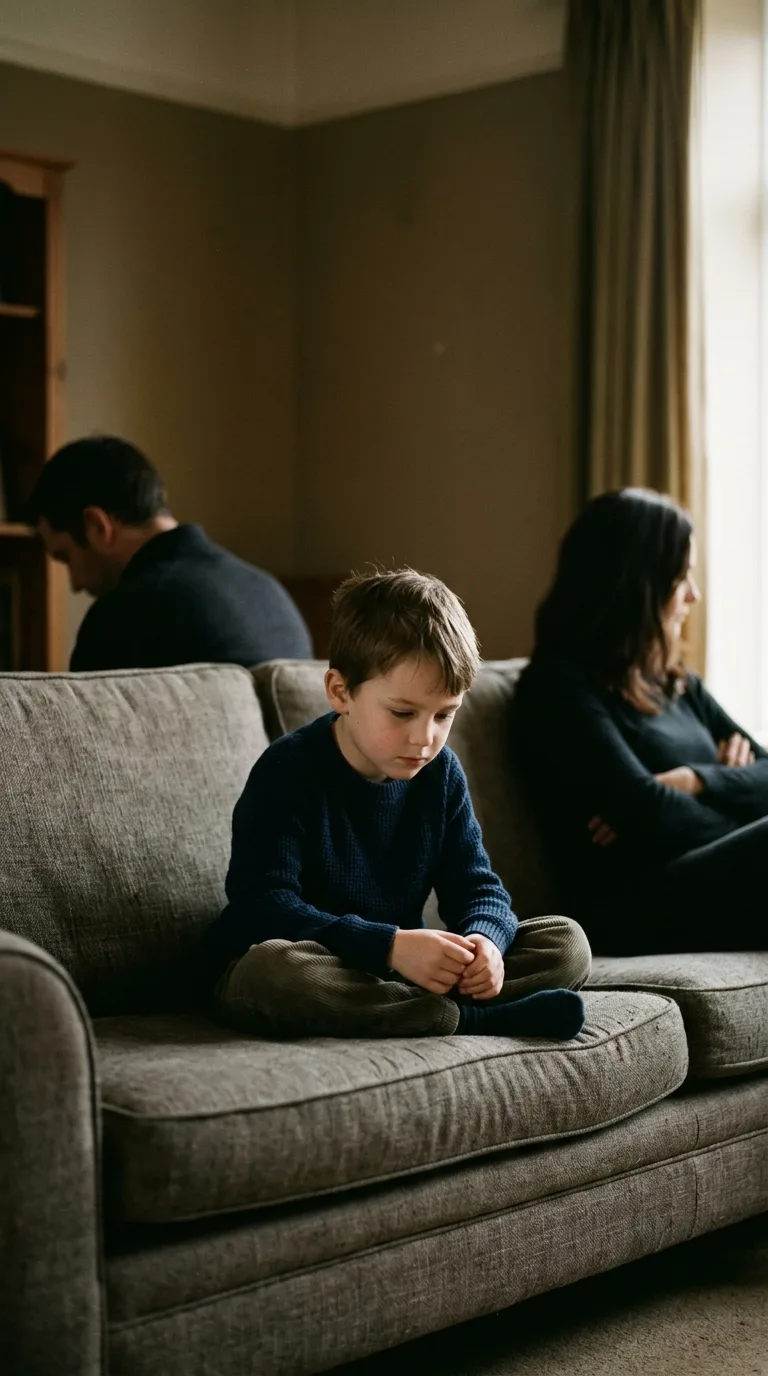
Common Signs a Child Feels Caught in the Middle
-
1
Carrying Messages
Your child relays information, complaints, or logistics between households that should really pass between the adults directly.
-
2
Editing the Truth
They tell each parent a version of events shaped to avoid upsetting whoever is listening, rather than what actually happened.
-
3
Checking on a Parent's Feelings
A child becomes attuned to one parent's mood, worrying about them or trying to comfort them before tending to their own feelings.
-
4
Guilt Around Enjoying Time
They seem hesitant to say they had a good time with one parent, as though enjoying it would be a betrayal of the other.
-
5
Withdrawal or Vagueness
Once-easy conversation about their day becomes short and careful, especially anything touching on the other household.
A child who feels caught between parents isn't confused about who loves them. They're managing — trying to protect two people they love at once, often at the cost of their own peace.Cynthia Benedict Licensed Counselor and Certified Life Coach
Frequently Asked Questions
Does this only happen during divorce?
No. Loyalty conflict can appear in intact households with ongoing tension between parents, in co-parenting arrangements long after a divorce is final, and in blended families navigating new dynamics. Any situation where a child senses two adults they love are at odds can create this pull.
What can parents do to ease it?
Keep adult conflicts and logistics between the adults. Avoid asking a child to relay messages, report on the other household, or take sides. Let your child know clearly, and often, that it's safe to love both parents and to enjoy time with each of them without guilt.
When is it time to bring in a counselor?
If you notice your child withdrawing, showing new anxiety around transitions between homes, or taking on an outsized emotional caretaking role, a counselor can give them a neutral space to speak freely — and help the adults involved find a steadier way forward together.
Who provides this kind of counseling in Longwood, FL?
Cynthia Benedict, a Licensed Mental Health Counselor and Certified Life Coach based in Longwood, FL, works with children and teens navigating family conflict, separation, and divorce, in person and via telehealth.
Related Topics & Resources
Child & Adolescent Counseling
A full overview of how I support children and teens through anxiety, depression, grief, and family transitions in Longwood, FL.
Explore child & adolescent counselingMarriage & Relationship Counseling
Support for couples navigating conflict, communication, and co-parenting during and after separation.
Explore marriage counselingAnxiety and Children
How anxiety shows up in kids, and how families can help before it takes root.
Read MoreGive Your Child Steadier Ground
Let's Help Your Child Feel Free to Love Both Parents
If your child seems to be carrying more than their share of the tension at home, I'm here to help — with a warm, neutral space for them, and practical guidance for you.